

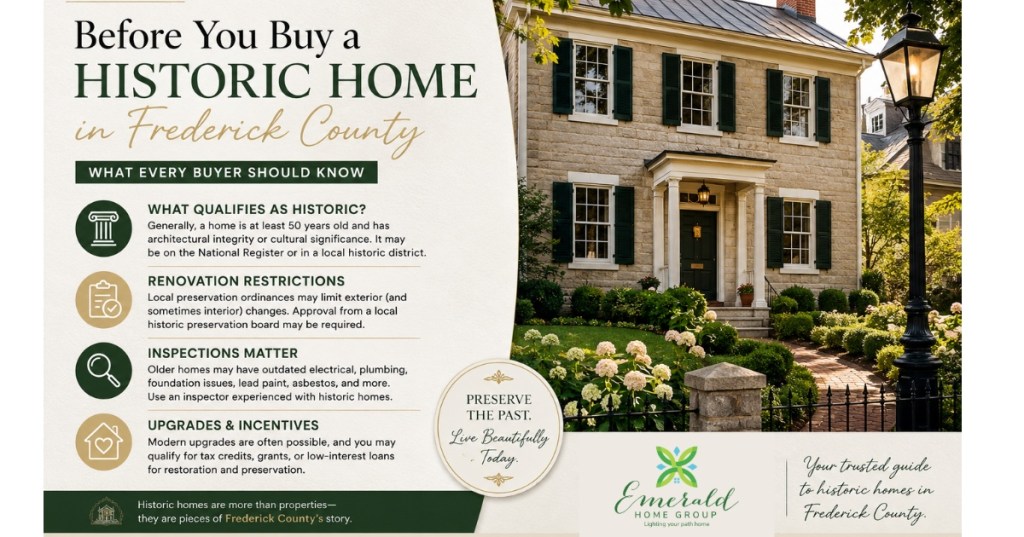
Historic designation can affect renovations and future improvements. Depending on the location of the home, local preservation ordinances may require approval before making exterior changes such as replacing windows, repainting the façade, adding solar panels, or building additions. Buyers should research local preservation guidelines early in the process to avoid surprises after settlement.
Inspections are especially important when purchasing older homes. Historic properties may have outdated electrical systems, aging plumbing, older foundations, lead paint, asbestos, or insulation concerns. Working with inspectors and contractors who specialize in older homes can help buyers better understand potential repair costs and maintenance needs.
The good news is that many historic homes can still accommodate modern living. Features like updated HVAC systems, smart thermostats, and energy-efficient lighting can often be added while preserving the character of the home. Some owners may also qualify for tax credits, grants, or low-interest loan programs designed to encourage historic preservation.
Historic homes are more than properties — they are pieces of Frederick County’s story. With the right preparation and guidance, owning one can be incredibly rewarding.
Source information adapted from the National Association of REALTORS® Consumer Guide: Buying a Historic Property.
 The Story Behind The Door
Leave a comment